Clear orientation for complex health information.
Health information is everywhere. Clear orientation is not.
I help health organizations, clinics and digital health teams turn complex information into trustworthy, human-centered content and orientation systems — without medical jargon, without cognitive overload, and without empty promises.
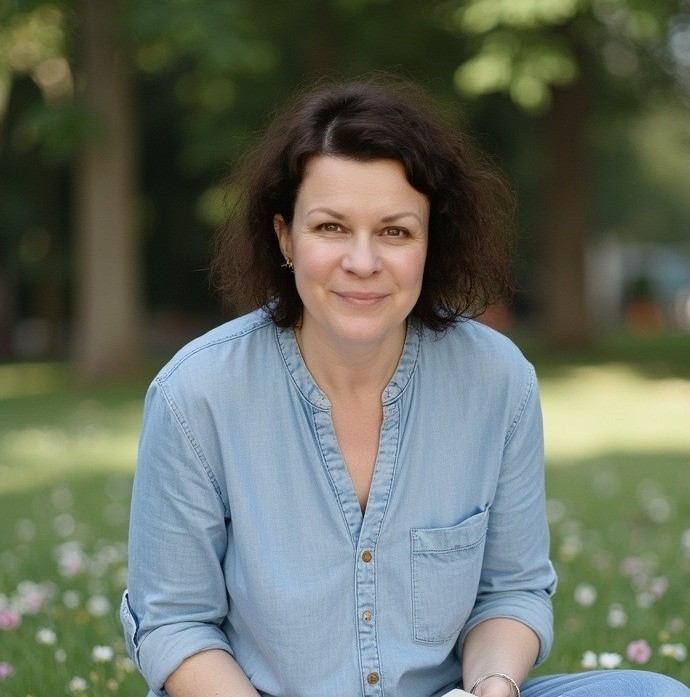
18+ years of experience within the German healthcare system · Independent digital health media and orientation projects
More information rarely means more clarity.
An Orientation System is a structure — editorial, digital, or both — that turns available health information into a next step someone can actually trust and act on.
Most health organizations do not have an information problem. They have an orientation problem. Content exists — but the question that matters most to the person reading it often stays unanswered: what does this mean for me, right now, and what should I do next?
Health literacy research consistently shows that people under stress process information differently. When someone is worried, in pain, or facing a decision they don't fully understand, cognitive load increases — and even accurate, well-written content can become difficult to absorb. More text rarely solves this. Clearer structure and orientation usually do.
This matters most at emotionally complex moments — a diagnosis, a fertility journey, a birth experience, a health decision made under time pressure. People in these moments are not looking for more information. They are looking for a next step they can trust.
Digital health content that ignores this gap tends to produce websites, guides and resources that are medically correct but practically unusable — technically complete, yet disconnected from how people actually make decisions.
More information rarely solves this.
Better orientation does.
Not a description of how I work. A direct look at it.
Four independent working examples, based on my own projects — not client case studies.
Orientation Audit — Excerpt
A structural review of a real concept page: the orientation gap, the cognitive load, the missing next step — and a priority matrix.
View the full audit → Artifact 02Information Architecture Blueprint
The layered logic behind an independent orientation tool — state identification, content branching, and honest next-step routing.
View the full blueprint → Artifact 03Orientation Journey — Before / After
What changes, step by step, when a structured orientation system sits between an event and a decision.
View the full journey → Artifact 04AI Agent Briefing — Vague Question to Verified Result
A real project brief from this site's own development: what had to be resolved before an AI agent could be trusted with the change, and how the result was checked.
View the full briefing example →For the full frameworks behind this work — including an AI editorial governance model, a build-versus-adapt decision matrix, and a two-axis women's health content architecture — see Research & Portfolio →
Across content, structure and digital tools, the work usually comes down to the same recurring needs:
- Structure complex health topics into content people can actually use
- Audit and improve patient-facing content and information architecture
- Identify orientation gaps in existing websites, guides or patient journeys
- Develop clear, honest next-step pathways instead of generic disclaimers
- Design blueprints for digital guides, navigators and decision-support tools
- Build women's health content architectures for fertility, pregnancy and postpartum topics
- Improve AI-supported editorial workflows without losing subject-matter accuracy
- Translate specialist or clinical knowledge into content non-specialists can understand
Six focused ways to work together.
Looking for a faster, fixed-scope entry point? See the GEO Readiness Audit — a focused assessment of how well your content and structure are set up to be found and cited by AI search systems.
Health Content & Orientation Audit
Your organization has content, but you're not sure whether it actually helps people find their next step.
See the audit and price →Patient-Friendly Content Architecture
Complex health topics are scattered across pages, formats and departments with no coherent structure.
Discuss your content structure →Orientation System Blueprint
You want to help people orient themselves digitally — through a guide, tool or decision pathway — but don't yet have a concept for how it should work.
Explore an orientation system →Women's Health Content Strategy
Fertility, pregnancy, birth and postpartum content is often fragmented, generic, or written without a grounded understanding of the emotional context.
Discuss a content strategy →AI-Supported Health Communication Workflow
AI-generated health content often sounds generic, loses subject-matter accuracy, or requires heavy manual correction.
Ask about AI workflow support →Lightweight Orientation Tool (Fixed Scope)
You want a working digital tool — not a blueprint — but don't need a full platform with backend, accounts or database logic.
Ask about a fixed-scope build →Not ready for a full engagement? Two focused, priced audits — a fast, low-commitment way to start.
GEO Readiness Audit · from €1,200
Is your content visible to AI search — or invisible?
A fixed-scope audit checks entity visibility, schema completeness and AI citability — the same method I ran on this site first, documented with a real before-and-after score.
See the audit and results →Health Content & Orientation Audit · from €1,500
You have content. Do you know where it loses people?
A fixed-scope review of existing content or a patient journey — friction points, overload, missing next steps — with a prioritized action list. See a worked example, not just a description.
See the audit and price →Independent orientation and content projects.
The following are independent concept and development projects — public working examples of how I approach orientation and content architecture, not paid client case studies. Each is labeled accordingly below.
Pregnancy & Baby Navigator (Eberbach)
ChallengeA regional pilot exploring whether a city can offer expectant families a coherent, non-medical orientation resource for pregnancy, birth and the first months with a baby.
ApproachDesigned a situation-led guide instead of a static information page — content organized around what a family is currently going through, not institutional categories.
RoleIndependent concept, content architecture and development
Health Navigator
ChallengeWomen in sensitive health situations often have access to information but no way to work out which parts of it apply to their situation.
ApproachA state-based navigation concept that orients people by situation and need rather than by topic category, connecting them to relevant next steps.
RoleIndependent concept and content architecture
System Compass
ChallengePeople in states of stress, overwhelm or uncertainty rarely benefit from more information — they need a way to name what they're experiencing and see a next step.
ApproachA private, browser-based reflection and orientation tool that processes nothing on a server, built around nervous-system states rather than diagnostic categories.
RoleIndependent concept, UX logic and development
Quiet Rooms
ChallengePeople in acute emotional overwhelm need immediate, low-threshold support that a text article cannot provide.
ApproachShort audio-based "regulation rooms" for specific situations, paired with plain-language explanations of what each room is — and isn't — for.
RoleIndependent concept and editorial development
Ella
ChallengeA large, growing content library becomes harder to navigate the more it grows — especially for people who don't know the right search terms.
ApproachA state-based navigator that asks about a person's current situation, not a search query, and returns the most relevant next step from hundreds of articles.
RoleIndependent concept and development project
Klarheitslotse (Fertility Consultation Guide)
ChallengeFertility patients often enter medical appointments overwhelmed, uncertain which questions matter most for their specific situation.
ApproachA short, privacy-conscious question-preparation flow — a few guided questions, sorted into a personal consultation sheet — that helps someone arrive with clarity about what they want to ask.
RoleIndependent concept, content design and development
Fertility Clinic (Concept Case)
ChallengeA hypothetical scenario: a fertility clinic's website is factually complete — services, diagnostics, costs, team — but may not answer the situational question a patient actually has in a given moment.
ApproachDemonstrates how the same orientation methodology used in the cases above could be applied to a single organization's full patient journey — reorganizing a subset of content around patient situations instead of clinical categories, alongside testable measurement hypotheses for a real pilot.
RoleConcept demonstration only — no real organization, no real data, no claimed results
Six steps, applied to almost every project.
- 01 Understand the situation. What is the organization, the content, or the user actually dealing with? Where does existing information create friction?
- 02 Identify orientation gaps. Where is information present but orientation missing? Where do people get stuck, overwhelmed, or unsure what to do next?
- 03 Reduce unnecessary complexity. Remove what doesn't serve the reader's next decision, without oversimplifying the underlying health topic.
- 04 Build a clear pathway. Structure content or tool logic around real situations and next steps, not internal categories.
- 05 Add trustworthy next steps. Make clear what a resource can and cannot do, and where to go for what it cannot provide.
- 06 Test for clarity. Check whether someone unfamiliar with the topic can actually follow the pathway — not just whether the content is accurate.
Working Principles
- Claims are sourced or clearly framed as perspective — never presented as unproven fact
- No invented data, testimonials, or outcome claims
- Clear about what a resource can and cannot do
- AI-supported where useful; subject-matter judgment stays human
Bettina Müller-Farné is the founder and editor-in-chief of Praxis Liebenswert, an independent digital health media platform and applied orientation-systems project focused on women's health and health communication.
More than 18 years of professional experience within the German healthcare system, with a focus on health administration, maternity-related services, fertility, patient communication and orientation, shape how she approaches complex health topics — with structural clarity, not just editorial polish.
Since founding Praxis Liebenswert, she has built an extensive editorial portfolio covering women's health, fertility, pregnancy, nervous system regulation and health literacy, alongside several independent digital orientation tools — guides, navigators and reflection tools designed to turn information into a usable next step. Her work has also been reviewed and published externally, including in DocCheck, a leading German medical platform for physicians and healthcare professionals.
Her work combines healthcare-system experience, editorial leadership, SEO and content strategy, and AI-supported editorial workflows — always with the underlying question of what a person actually needs to understand, decide, or do next. She now calls this discipline Orientation Systems: structures that turn health information into a trustworthy next step.
Based in Germany, working remotely with organizations internationally.
Praxis Liebenswert is an independent platform and is not affiliated with or commissioned by a statutory health insurance provider.
- Not medical advice, diagnosis or treatment
- Not therapy, psychological counseling or coaching
- No physician, therapist or psychologist qualification implied
- Not affiliated with or commissioned by any statutory health insurance provider
A short, low-friction way to start.
- 01 Initial project inquiry. A short message about what you're working on.
- 02 Scope and orientation check. A short exchange to clarify the actual problem and whether this is a good fit.
- 03 Project proposal. A clear scope, deliverables and timeline.
- 04 Development. The agreed work, with regular check-ins on complex projects.
- 05 Delivery and optional refinement. Final delivery, with room for one round of adjustment.
Usually answered within a few business days. This form is for project inquiries — not for medical questions or personal health situations.
Upwork
If you found this page through Upwork, please contact me directly through the Upwork platform — that's the best way for us to get started there.
Legal information: Imprint (German) · Privacy Policy (German)
What types of organizations do you work with?
Health organizations, clinics, digital health and health-tech companies, health publishers, foundations, NGOs, municipalities, research projects and associations — anywhere complex health information needs to become understandable and navigable.
Do you provide medical advice?
No. This work is editorial, structural and communication-focused — not medical advice, diagnosis or treatment.
Can you work with existing content?
Yes. Many projects start with an audit of existing content or a patient journey, rather than starting from zero.
Do you also create German-language content?
Yes — most of my published editorial work is in German, for the German-speaking healthcare and women's-health space. English-language and cross-language projects are also possible.
Can you support AI-assisted content workflows?
Yes. I design editorial workflows where AI supports research, structuring and drafting, while subject-matter accuracy and final judgment remain human-led.
Do you design or code complete platforms?
I build lightweight, self-contained tools myself — guided flows and simple state-based logic, browser-based, DSGVO-by-design, no backend required. For larger or more complex platforms with backend infrastructure, user accounts or database systems, I provide the content architecture and orientation logic and collaborate with development teams for the technical build.
Can projects be completed remotely?
Yes. All work is conducted remotely, from Germany, with organizations internationally.
How do we start?
Send a short project inquiry through the contact form above, including what you're working on and what you'd like support with. I'll follow up with a short scope and orientation check before any proposal.